In May, we participated in the UTS Service Saturday volunteer event and spent the day working with a group of about 20 grade 8 student volunteers. What an experience!
Rather than asking students to stuff envelopes or some other mundane volunteering task, we decided to let them speak for themselves. After all, they’re the ones who will live to see the worst impacts of climate change – so the actions we take today matter most to them.
After a quick crash course in grassroots campaigning, the class was given the option of designing a postcard to promote climate action — the exact postcard you received — or working on a climate action pledge to send around to their fellow students.
We were truly wowed. In just a few hours, we had two completely new campaigns that only needed a few finishing touches before they were ready to go. Both groups truly delivered!
The pledge group modified our pledge with their fellow students in mind, adjusting things like transportation choices that students don’t always have control over, and added in the idea of a prize to motivate students to complete the pledge — so a random student who took the pledge will be chowing down at Fresh thanks to a $50 gift certificate.
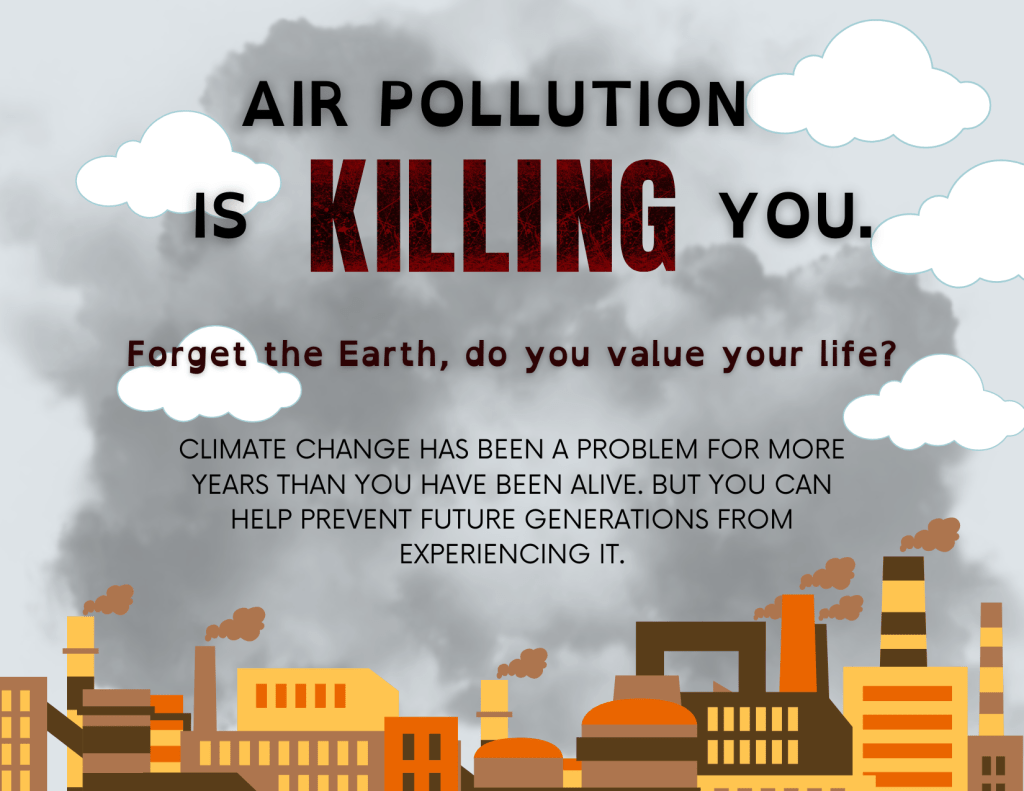
We gave the students total control of the design and messaging in the postcard. It’s unlikely we would have released such a macabre postcard otherwise, but we have to admit that it’s pretty punchy and attention-grabbing.
During our presentation, we discussed ‘co-benefits’ and ‘multi-solving.’ And one of the examples of ‘co-benefits’ we gave was the fact that reducing our reliance on gas-powered vehicles won’t just reduce emissions, it will also improve our air quality and make our cities quieter. It was that tidbit about air pollution that the students chose to highlight in their postcard. We think that’s a good choice — the Auditor General of Ontario says that air pollution is “estimated to be responsible for about 7% of deaths in Ontario.” If we can reduce greenhouse gas emissions and improve air quality at the same time, that’s win-win!
It feels a little eerie that they designed this campaign before the recent wave of wildfires which has shown yet another deadly connection between fossil fuels, climate change and air pollution.
Another thing we spoke to the students about was the idea that social change rarely happens just because the facts are on your side. Relationships and the behaviour of those around you have more impact on behaviour than a fact-based argument will. And that’s why they wanted to tell you who they are – they’re not just random people, they’re high school students studying and living their lives in your neighbourhood. But they’re also too young to vote and too young too tackle this global issue which will shape so much of their lives without help from others.
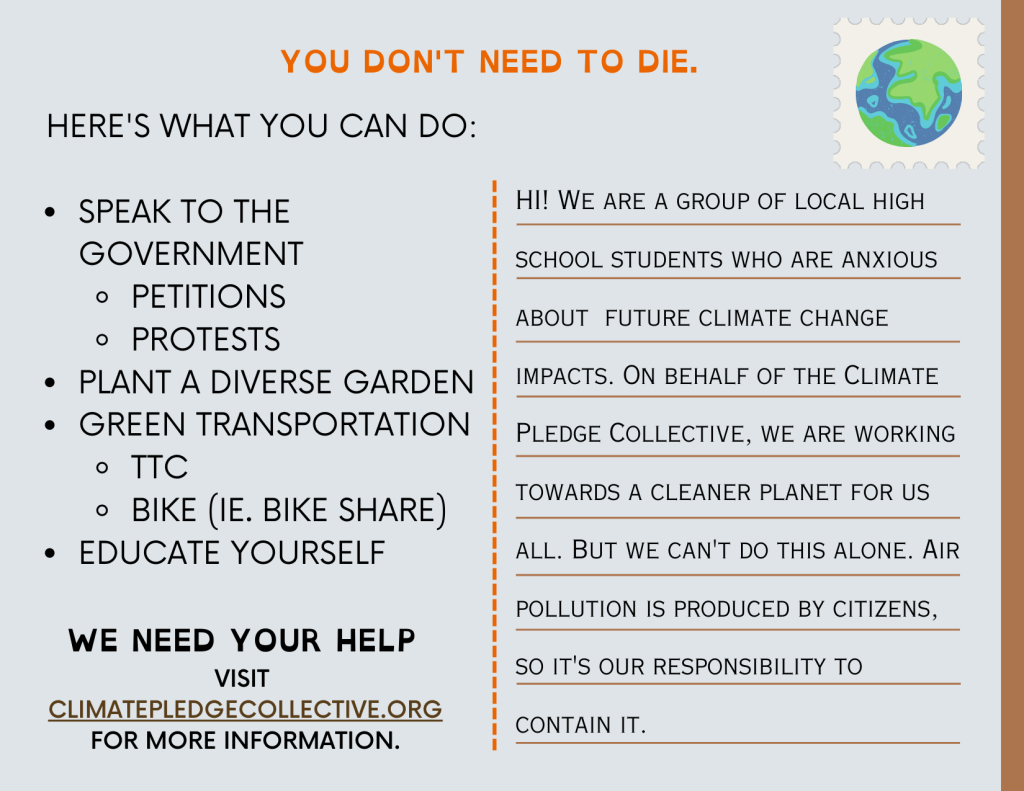
So what can you do to help? Please take this quick survey to tell us what you’re willing to do to help reduce emissions and we’ll share the results with the students.
We’re not taking names or emails, but we will collect data on the pledges and let the students know how many people pledged and what actions they pledged to take.

 Climate Pledge Collective